From Barefoot Doctors to Barefoot Artificial Intelligence: The Political Economy of Inclusive Technology
Speaker:Zhang Yinhao, Lecturer, Nanjing Normal University
Host:Xu Zhun, Professor, Lingnan College
Time and Date:10:00, October 26, 2026 (Monday)
Venue:Wang Dao Han Conference Room (101), Lingnan Hall
Language:Chinese
Abstract:
Artificial intelligence turns professional expertise into low-cost services and significantly lowers the threshold for building digital tools, and thus carries enormous potential for inclusion. Yet the expansion of service coverage does not automatically translate into society's own capacity. Re-examining the history of digital technology through Ivan Illich's theory of radical monopoly reveals a long-standing parallel trend of widespread use alongside concentrated building, through which many technologies have moved from inclusion to counter-productivity. Large language models, which allow people to describe their needs in natural language and to generate and modify programs accordingly, are loosening this division of labour, and AI has thus arrived at a new fork in the road: one technological path, represented by workbenches and open models, enables ordinary people to build and sustain tools according to local needs, while the other, represented by hosted agents, may gather the conditions of operation back into the platform. The "barefoot" model formed by China's barefoot doctors and related practices shows that the downward diffusion of knowledge can become social capacity only when it is combined with grassroots builders, the collective economy, professional support and clearly bounded tasks. Drawing on this experience, the talk proposes the concept of "barefoot artificial intelligence" and argues that the inclusiveness of AI should be measured anew by the distribution of the capacity to build, modify and sustain tools.
Profile:
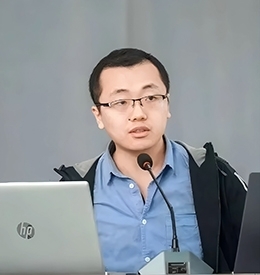
Dr. Zhang Yinhao is a lecturer at the School of Journalism and Communication, Nanjing Normal University. He holds degrees from Southwestern University of Finance and Economics, the University of Sydney and the University of Adelaide. His research interests include Marxist views of journalism and political economy. He has published articles in a range of Chinese and international journals, including Open Times, the Chinese Journal of Communication and the Journal of Australian Political Economy. His recent work focuses on the socialist experience of development communication and on digital sovereignty in the Global South.