The Development of Artificial Intelligence and Great-Power Competition
Speaker:Yao Shujie, Professor, Liaoning University
Host:Lu Xiaodong, Professor, Lingnan College
Time and Date:10:00, September 11, 2026 (Friday)
Venue:W.T.Chan Auditorium, Lingnan Hall
Language:Chinese
Abstract:
This talk is organized into four parts: the background and trends of AI development, the evolution of the global landscape and great-power rivalry, China's leading role in the development trend, and the development path of next-generation AI. The talk argues that AI is the core driving force of the Fourth Industrial Revolution, now transitioning from generative AI toward the era of agentic and physical AI. Globally, a pattern of "two powers leading while others compete with distinctive strengths" has emerged, with Sino–US competition as the main axis, the EU prioritizing ethical and regulatory governance, and Japan excelling in robotics. China possesses five major advantages—scale, institutions, market, agriculture, and accumulated experience—with its large language models ranking among the global first tier, and notable achievements such as the rise of the new-energy vehicle industry, DeepSeek's low-cost breakthroughs, and the breakout success of Unitree robots. The talk also examines challenges at the technological, ethical, and societal levels, and proposes five breakthrough paths: deepening technological integration, accelerating industrial upgrading, empowering government governance, advancing international collaborative governance, and driving the intelligent transformation of national defense.
Profile:
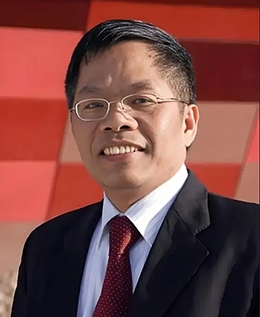
Yao Shujie is Dean and Senior Professor of the Li Anmin Institute of Economic Research at Liaoning University, Distinguished Professor at Chongqing University, and a Distinguished Professor of the Changjiang Scholars Program. He previously served as the founding Dean of the School of Contemporary Chinese Studies at the University of Nottingham, UK, and as an economic consultant to international organizations including the World Bank and the United Nations. In 2021, he was appointed Chair of the Steering Committee for Undergraduate Economics Programs in Chongqing Higher Education and was named an Excellent Scientist under the Chongqing Talent Program. He has long been engaged in research on the Chinese economy, publishing nearly 300 papers in leading academic journals at home and abroad—including the Journal of Political Economy and 14 papers in Economic Research Journal—and authoring 20 books in Chinese and English. More than 20 of his Chinese-language articles have been reprinted in full by Xinhua Digest and the Information Center for Social Sciences, Renmin University of China. He has published over 100 articles in mainstream media outlets such as the Financial Times, People's Daily, Guangming Daily, Reference News, and People's Tribune, and has long served as a special commentator for the international channel of China Central Television (CCTV), having met on multiple occasions with former state leaders. He serves on the editorial boards of multiple SSCI/CSSCI journals, including Economic Research Journal, and is Editor-in-Chief of Digital Economy and Sustainable Development.
From 2020 to 2025, he was consecutively listed among Elsevier's Global Highly Cited Researchers in Applied Economics and among the World's Top 2% Scientists for both career-long and single-year impact. He has led two Major Projects of the National Social Science Fund of China, two General Programs of the National Natural Science Foundation of China (both rated "Outstanding" in the post-completion assessment), major and key research projects of the Chinese Academy of Engineering, and more than ten other provincial and ministerial research projects. He has received numerous awards, including the Second Prize of the Ministry of Education Award for Outstanding Research Achievements, the Zhang Peigang Award for Outstanding Papers in Development Economics, and the An Zijie International Trade Research Award. Several of his policy advisory reports have been adopted with written instructions from national, provincial, and ministerial leaders.