A Darwinian Force for Entrepreneurial Spirit: The Case of Chinese Digital Revolution
Speaker:Ding Sai, Professor, University of Glasgow
Host:Jiang Kun, Professor, Lingnan College
Time and Date:16:30, June 15, 2026 (Monday)
Venue:C.S.LAM Conference Room (103), Lingnan Hall
Language:English + Chinese
Abstract:
China experienced a boom in new digital-economy enterprises following a policy reform in 2015 that lowered entry barriers to entrepreneurship. We investigate whether and how a Darwinian mechanism--entrepreneurship for marriage market competition--has amplified the effect of the policy change. By exploiting cross-city variation in the youth-cohort sex ratio as a measure of local marriage market competition, we find that those cities with a higher sex ratio systematically exhibit a significantly greater response to the national policy in terms of the creation of new digital-economy firms. Such patterns are concentrated in the creation of privately owned firms, particularly within subset of the digital economy that require relatively low start-up capital, and in cities with higher levels of human capital. These firms exhibit strong performance, as reflected in higher survival rates and greater access to venture capital. The evidence supports a strong complementary role of the Darwinian mechanism to a major policy reform in promoting high-quality entrepreneurship in the digital sector in China.
Profile:
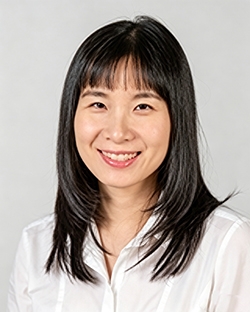
Professor Ding Sai holds the Chair in Economics at the Adam Smith Business School, University of Glasgow. She joined the University of Glasgow in 2010, after earning her PhD in Economics from the University of Birmingham and completing postdoctoral research at the Department of Economics, University of Oxford.
Professor Ding's research interests are broad, spanning corporate finance, economic development, productivity, and the Chinese economy. Her work has been published in numerous leading international journals in economics and finance. From 2021 to 2024, she served as Head of Economics at the University of Glasgow.